
Resistance to Change: Obstacle or Messenger?

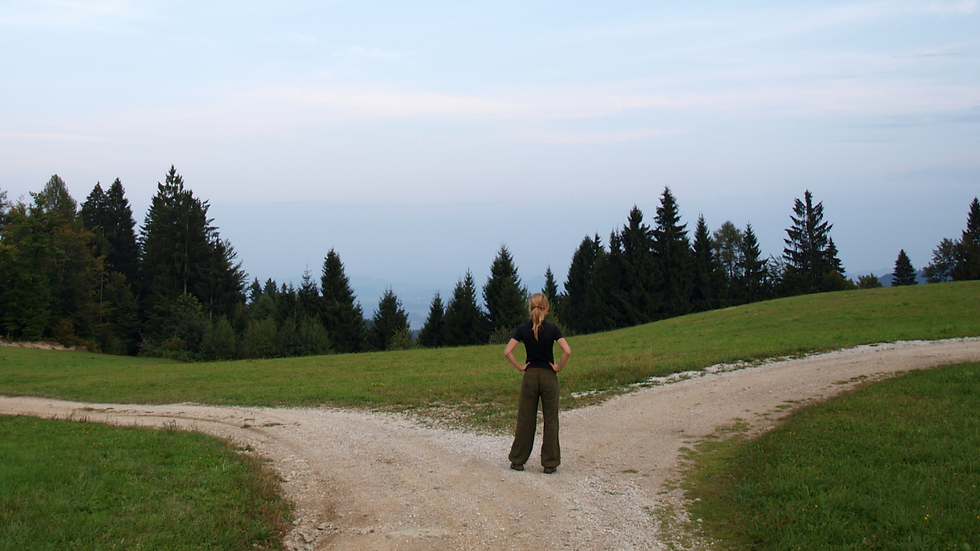
This is the first blog post in a 3-part series exploring resistance and its role in personal transformation. In this post, we’ll explore whether resistance is truly an obstacle or whether it may be carrying an important message. In the next post, we’ll look at the different forms resistance can take. In the final post, we’ll explore practical strategies for moving through resistance and creating lasting change.
Have you ever noticed that sometimes the thing you want most is the very thing you seem to resist?
You want to have the conversation.
But you keep putting it off.
You want to start the business.
But you keep finding reasons to wait.
You want to prioritize your health.
But somehow other things always seem to come first.
You want to change.
Yet part of you seems determined to stay exactly where you are.
Most people see resistance as the enemy.
Something to push through.
Something to overcome.
Something that proves they lack discipline, motivation, or commitment.
I see it differently.
Over the years, I’ve come to believe that resistance is often information.
Not always comfortable information.
But important information nonetheless.
When resistance shows up, it is often revealing that something within us is not fully aligned.
Part of us wants to move forward.
Another part of us is uncertain, afraid, or attempting to protect us from something.
This is one reason positive thinking alone rarely creates lasting change.
If one part of you wants the outcome and another part of you is trying to protect you from potential pain, disappointment, rejection, failure, or uncertainty, internal conflict is created.
The greater the conflict, the greater the resistance.
Imagine someone who wants to start a new business.
Consciously, they may desire freedom, purpose, and financial success.
Yet unconsciously, they may fear failure, criticism, financial loss, or disappointing the people they care about.
Both parts have positive intentions.
One is moving toward possibility.
The other is attempting to provide safety by avoiding failure, rejection, criticism, financial loss, or disappointing the people they care about.
The challenge is not that either part is wrong.
The challenge is that they are pulling in different directions.
What we often label as procrastination, self-sabotage, inconsistency, or lack of motivation may actually be a signal that competing needs, values, beliefs, or fears are operating beneath the surface.
Resistance frequently appears when:
A value is being challenged.
A need is not being met.
A fear has not been addressed.
A belief conflicts with a desired outcome.
Or when part of us does not yet feel safe moving forward.
This is why awareness matters.
Not because awareness alone creates change.
Because awareness helps us understand what resistance is trying to communicate.
Instead of asking: “How do I get rid of this resistance?” We might ask:
“What is this resistance trying to show me?”
“What is it protecting me from?”
“What need is it attempting to meet?”
“What fear is asking to be acknowledged?”
“What would need to happen for this part of me to feel safe moving forward?”
Those questions shift us from fighting ourselves to understanding ourselves.
And understanding often creates the conditions for transformation.
I am not suggesting that every fear is accurate. Or that every resistance should determine our choices.
But I am suggesting that resistance often deserves curiosity before judgment.
When we become curious, we discover that resistance is not always standing in the way of change.
Sometimes it is guiding us toward the very thing that needs our attention.
Sometimes it reveals a wound that needs healing.
Sometimes it exposes a belief that needs updating.
Sometimes it highlights a need that deserves a healthier strategy.
And sometimes it simply reminds us that meaningful change requires compassion, not force.
Over time, I’ve noticed that the people who create lasting change are not necessarily the people who push the hardest.
They are often the people who become willing to understand themselves more deeply.
Because once resistance is understood, it often begins to soften.
And when resistance softens, change becomes possible.
So I’ll leave you with a question:
Where are you experiencing resistance in your life right now?
And if that resistance could speak, what might it want you to know?
Perhaps resistance isn’t the obstacle.
Perhaps it’s part of the path.
In the next blog post, we’ll explore the different forms resistance can take, including perfectionism, self-sabotage, avoidance, people-pleasing, and other patterns that often keep us stuck without realizing it.
To live by design,
Sandra Vesterstein
Founder & Creator, Thriveology of Living™


Comments